
 eProfil
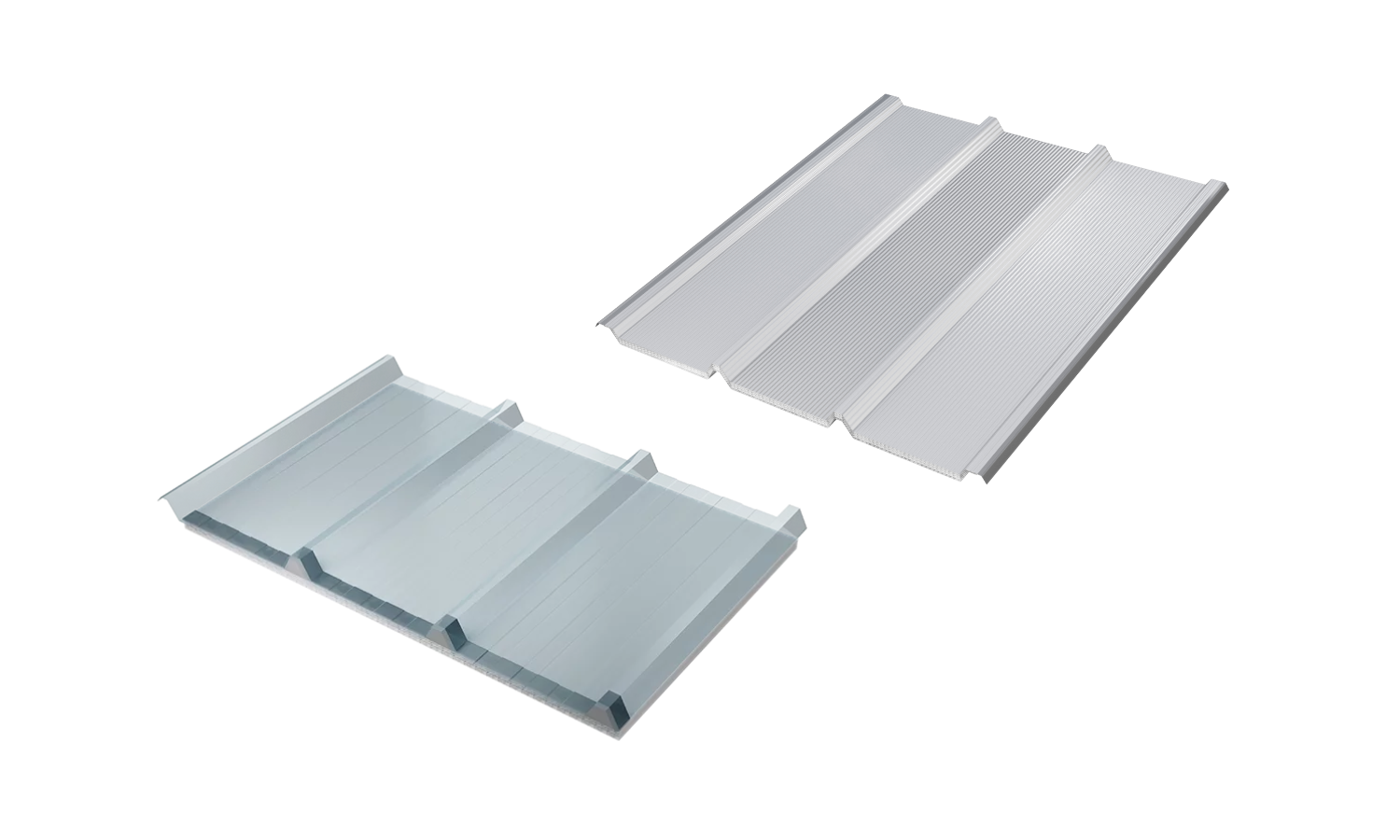

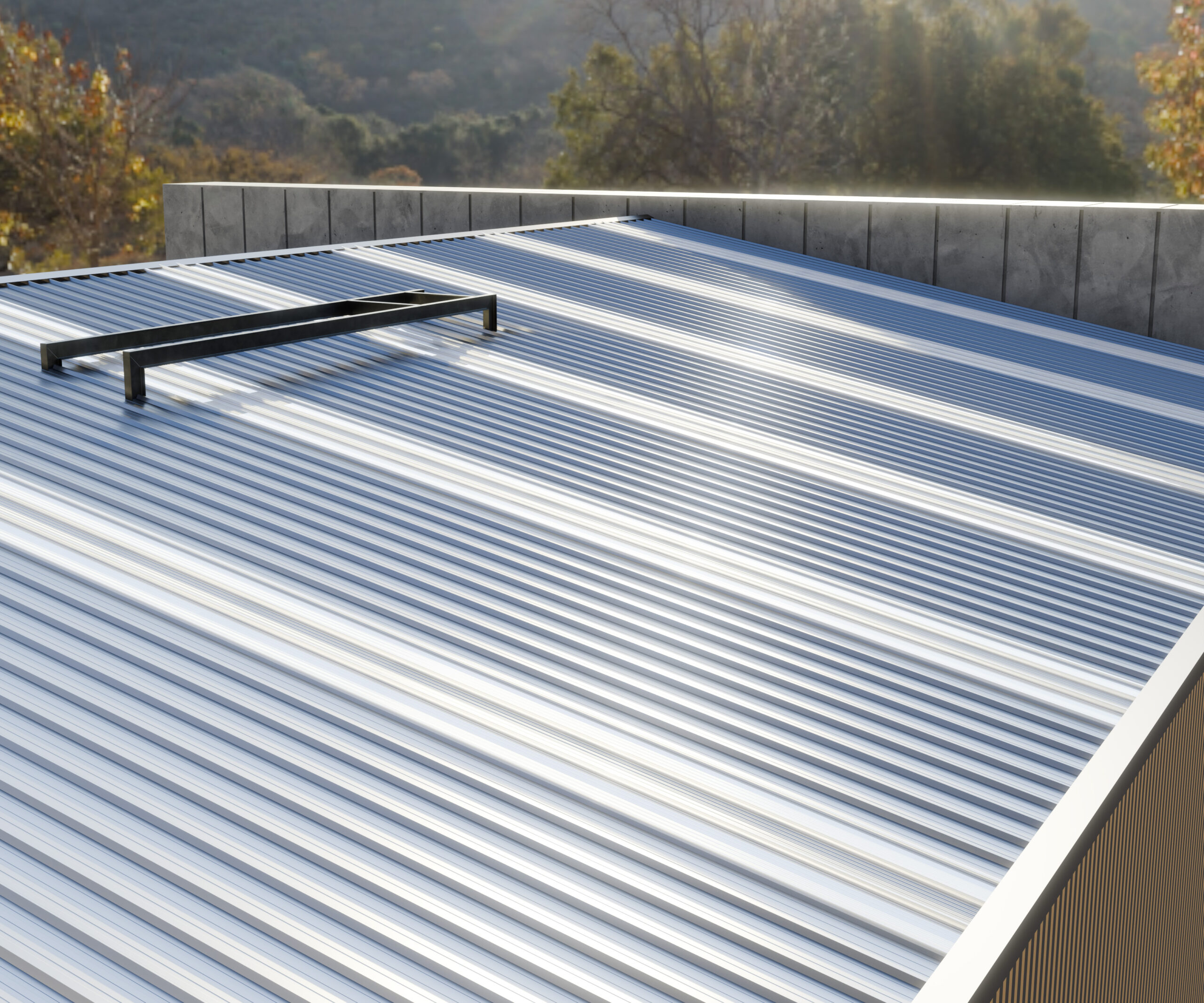


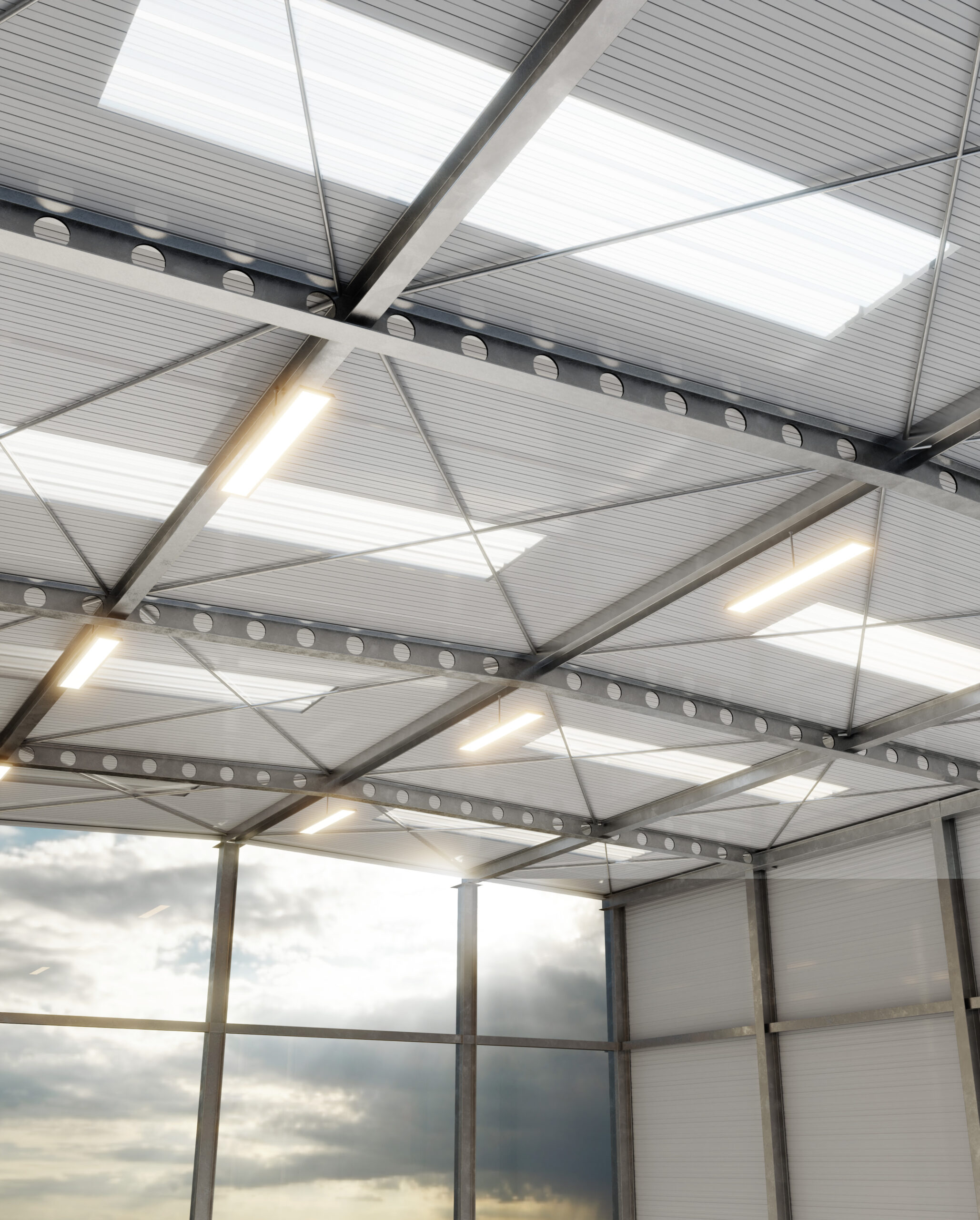

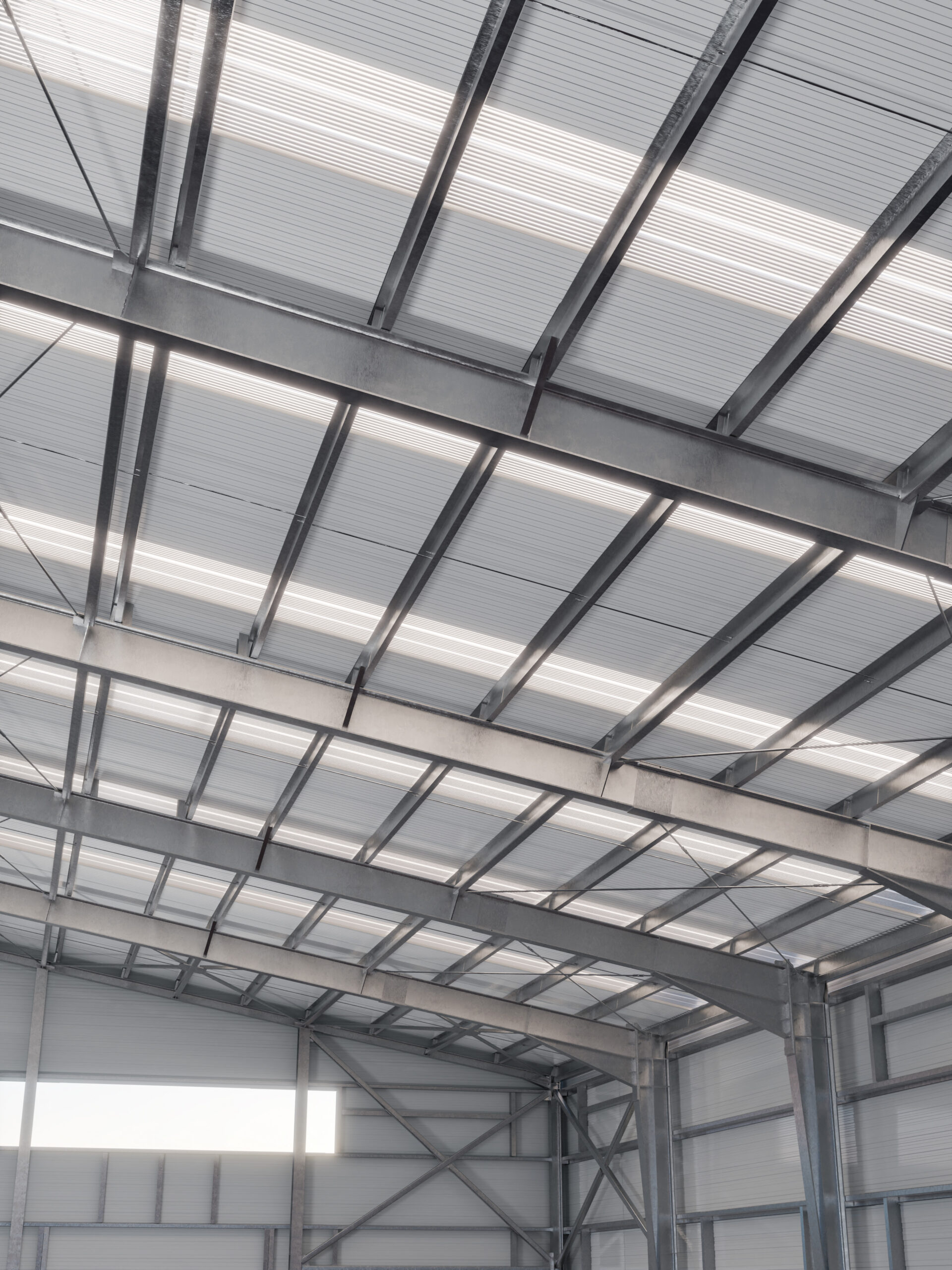
The application of the SPR-SKY rooflight is an effective solution for providing natural daylight inside a building. With roof coverage in the range of 7–15%, it can replace electric lighting. The multi-chamber structure of the rooflight limits excessive temperature increases caused by solar radiation while minimizing heat losses inside the building. Rooflights can be used in industrial facilities with pitched roofs (with a slope of more than 10%) in the form of warm covering with sandwich panels. The SPR-SKY rooflight can be installed as a point source of light or as a continuous skylight strip covering the roof from ridge to eaves, in the middle of the roof slope, near the ridge, or from the middle to the eaves. SPR-SKY rooflights connect to sandwich panels via side joints (on ridges) and end joints (overlaps), but the rooflight’s outer skin is 3–4 times thicker than the outer skin of the sandwich panel. This means that at overlap joints the claddings do not fit perfectly, so special attention must be paid to sealing during design and installation. It should also be remembered that rooflights are not as strong as the adjacent sandwich panel covering. Therefore, to ensure strength and tightness, installation must follow guidelines and good construction practice.
The application of the SPR-SKY ECO rooflight is an effective solution for providing natural daylight inside a building. With roof coverage in the range of 7–15%, it can replace electric lighting. The multi-chamber structure of the rooflight limits excessive temperature increases caused by solar radiation while minimizing heat losses inside the building. Rooflights can be used in industrial facilities with pitched roofs, with the minimum roof slope being identical to that required for SPR CORE roof panels (not joined in length and without technological passages), i.e. 5%, in the form of warm covering with sandwich panels. The SPR-SKY ECO rooflight can be installed as a continuous skylight strip covering the roof from ridge to eaves. It should also be remembered that rooflights are not as strong as the adjacent sandwich panel covering. Therefore, to ensure strength and tightness, installation must follow guidelines and good construction practice.
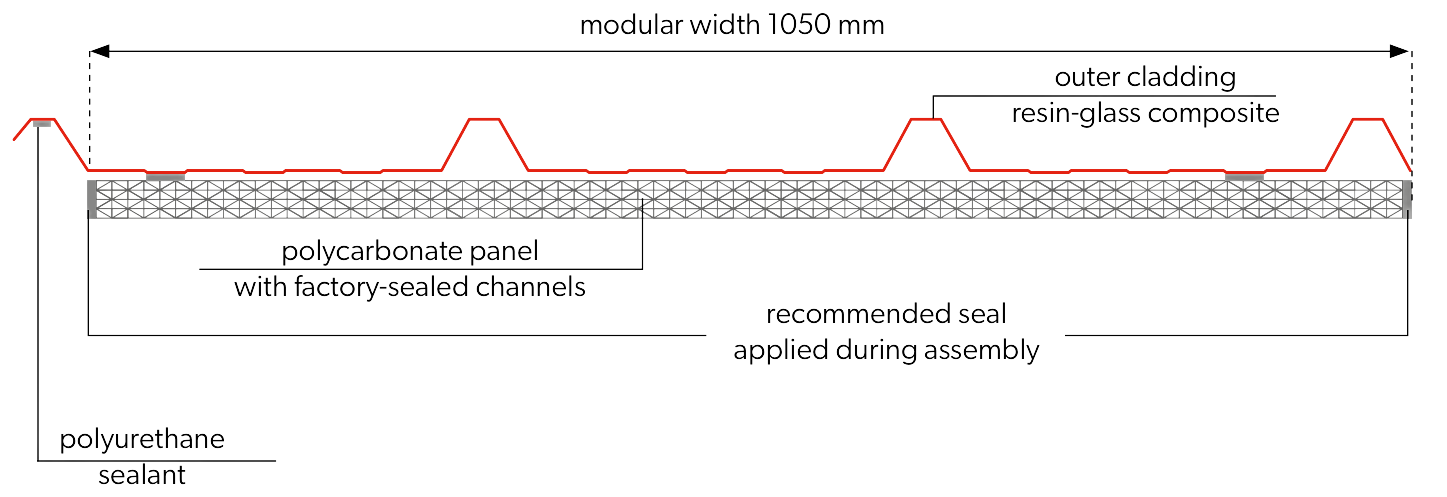
| Material: | Fiberglass-resin composite combined with polycarbonate thickness 25 mm or 32 mm |
| Modular width: | 1050 mm |
| Opening light length: |
7.0 m (maximum cladding length 7.2 m) Joining of rooflights along the length is allowed directly on site |
| Recommended minimum roof slope: | 10% (with 20 cm overlap) |
| Maximum support spacing: | 1.5 m |
| Thickness: |
Polycarbonate 25 mm – 30 mm + ridge height Polycarbonate 32 mm – 35 mm + ridge height |
| Weight: | 5.9 kg ± 5% |
| Allowable dimensional tolerances (length, width, thickness): | ± 5% |
| Thermal transmittance coefficient: |
U = 1.5 W/m²K for 25 mm polycarbonate U = 1.1 W/m²K for 32 mm polycarbonate |
| Light transmission: | 50% ± 5% |
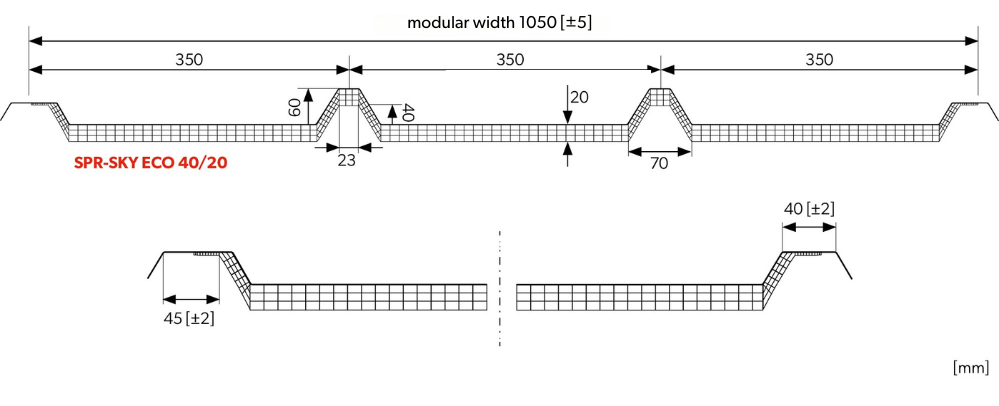
| Thickness: | 20 mm |
| Modular width: | 1050 mm (±5) |
| Wave width: | 4 waves of 350 mm |
| Corrugation height (internal): | 45 mm |
| Edge corrugation thickness: | 40±2 mm (external) – 45±2 mm (internal) |
| Sheet length: | 13 m |
| Color: | Satin transparent or opal |
| Radius of curvature: | Factory bending R 3.5 or 6.0 m – cold bending R > 10 m |
| Sheet edge sealing: | Heat-sealed ends |
| Internal structure: | Four-wall |
| UV protection: | On external layer |
| Fire resistance: | B s1 d0 |
| Operating temperature range: | -40° / +130° |
| Linear thermal expansion: | 6.7 × 10⁻⁵ |
| Thermal insulation: | U = 2.28 W/m²K | U = 1.98 W/m²K | U = 1.78 W/m²K |
| Light transmission (version: satin transparent): | 67 ±2 % | 65 ±2 % | 60 ±2 % |
| Light transmission (version: opal): | 43 ±2 % | 41 ±2 % | 38 ±2 % |
Catalogues / Leaflets
Product Cards
Assembly Instructions


